Electronic cargo release and container terminal liability under Korean law
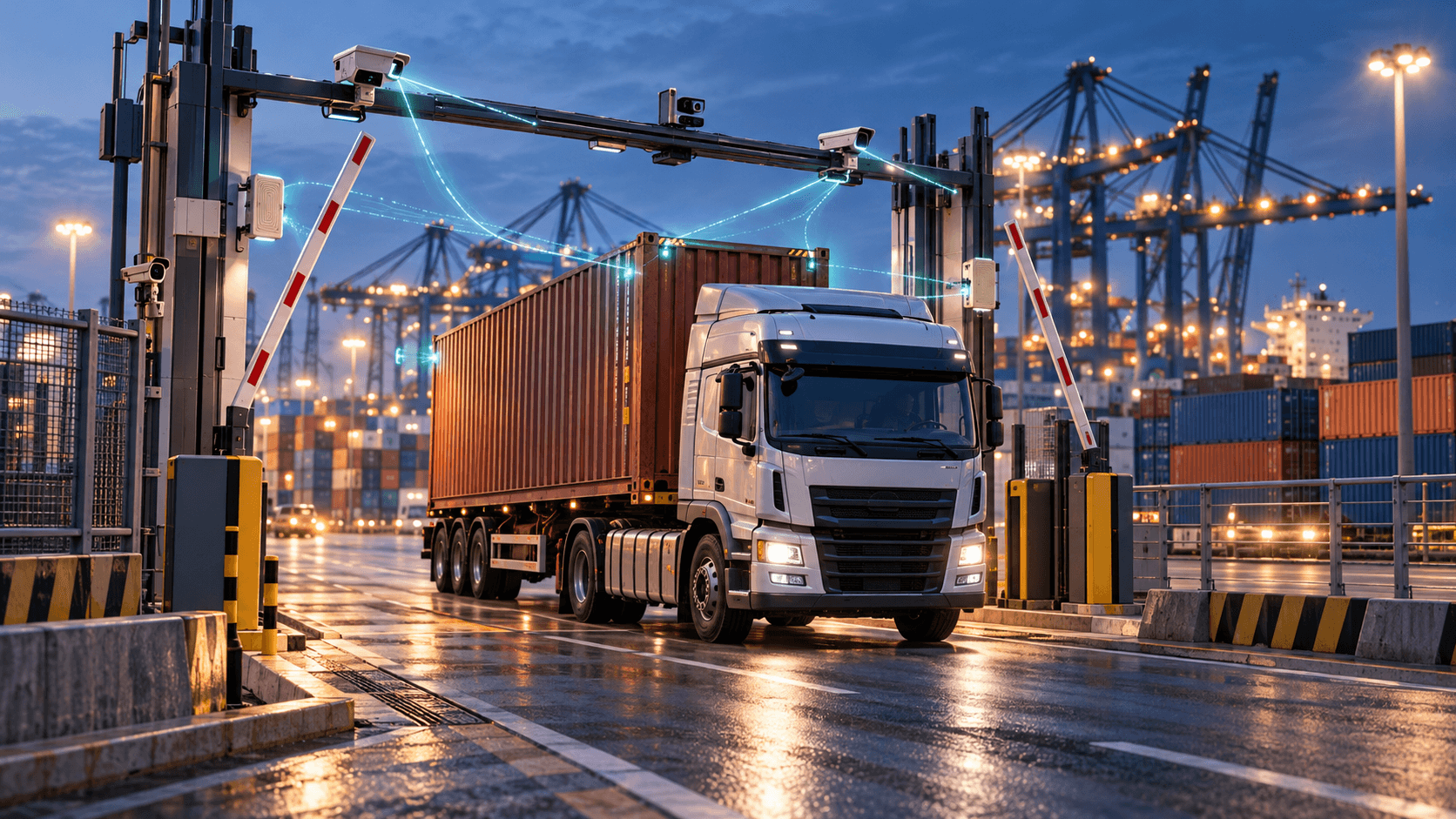
Electronic signals now open container terminal gates, but what do they mean for liability when cargo is released without a house bill of lading? A Seoul High Court judgment reflects the realities of digital cargo release, clarifies the responsibilities of terminals and freight forwarders, and raises broader questions about how maritime law can keep pace with changes already taking place in practice.
This blog post is an English translation of a Korean-language column the author contributed to the Korea Shipping Gazette on 5 May 2025. The translation is the author’s own; in the event of any discrepancy, the Korean original prevails.
Electronic signals as the key to the terminal gate
In container yards, hundreds of ‘release instructions’ are exchanged instantaneously each day, entirely as electronic signals. The era of physically exchanging paper documents has given way to one in which data and electronic signals are central to logistics.
A Seoul High Court judgment, which became final when the Supreme Court dismissed the appeal without further substantive examination, concerned a cargo owner’s claim for damages against a container terminal. The cargo owner alleged that the cargo had been delivered against a master delivery order alone, rather than a house bill of lading or a house delivery order.
The court held that, since it was sufficient for the container terminal to deliver the cargo to the cargo owner in accordance with the master delivery order issued by the shipping line (the carrier), and since in practice, too, terminals merely release cargo after checking information such as COPINO (advance container movement information), which contains master delivery orders and other information sent by shipping lines and others, it was difficult to find that the terminal was under a duty to deliver cargo against a house bill of lading or a house delivery order based on it. COPINO is an internationally standardised EDI message format conveying transport order information from a transport operator to a container terminal.
A comparison with the earlier Supreme Court judgment
The judgment recognises the reality that electronic container release systems operate on the basis of electronic delivery orders issued by shipping lines and COPINO information, and that these electronic signals have become the ‘key that opens the door’ of the container terminal. This recent judgment marks a meaningful change when compared with a Supreme Court judgment delivered in 2009. In that earlier case, the Supreme Court held that “a bonded warehouse operator’s act of delivering cargo carried by sea to an importer without surrender of the bill of lading and without instructions from the carrier or others, having checked only the master delivery order issued by the shipping line, unlawfully infringes the house bill of lading holder’s right to demand delivery of the cargo and therefore constitutes a tort”.
Digital release procedures and the terminal liability standard
In Korea, however, container cargo release procedures have already been standardised on an electronic basis. At container terminal gates, OCR cameras, RFID equipment and other devices automatically recognise vehicle registration numbers and container cargo information. Every stage is linked through real-time data, in the following sequence: completion of customs clearance, issuance of the shipping line’s delivery order, vehicle dispatch by the (inland) transport operator, passage through the terminal gate, loading in the yard, and gate-out.
Complex paper documents have disappeared, giving way to an environment in which system data and logs have legal effect. Amid this digital transformation of international logistics, the Seoul High Court judgment goes beyond a mere change in legal interpretation. Reflecting digitalised practice, it sets out a practical standard under which a container terminal is now relieved of liability if it has checked the master delivery order and COPINO information.
The responsibilities of freight forwarders and emerging digital risks
The judgment is also important because it redefines the boundaries of responsibility among the various stakeholders in a digital environment. From the cargo owner’s perspective, it may be viewed as weakening the protection of rights under house bills of lading, but it makes clearer where responsibility lies for freight forwarders in managing those bills. As the link between house and master bills of lading, freight forwarders now bear greater responsibility for ensuring that house bills of lading are collected and that cargo delivery is secured.
Of course, the transitional period of digital transformation also presents various legal risks. System errors or cybersecurity breaches may lead to misdelivery of cargo, and responsibility in such cases may become unclear (for cyber risks, readers may refer to my December 2024 column). In this environment, assessing the scope of container terminal liability from the perspective of a paper-based system is out of step with reality. I therefore regard the Seoul High Court judgment as a step forward in legal interpretation that reflects these practical realities.
The courts begin to catch up with practice
Accelerating digital transformation has recently become one of the main concerns of the conservative shipping industry. The aim is to maximise operational efficiency by actively adopting digital technologies, including not only electronic bills of lading but also autonomous ships, artificial intelligence (AI), the Internet of Things (IoT) and other technologies. Change has thus already begun across the industry and in day-to-day operations. Whether the laws, institutions and practices that should support it can keep pace will determine the success or failure of that change.
Major ports around the world are already introducing paperless systems. Singapore gave electronic bills of lading legal effect through its 2021 amendment to the Electronic Transactions Act and the government-led TradeTrust framework, and Singapore-based global port operator PSA International is also participating in related pilot projects. The Port of Rotterdam has digitalised most of its core procedures, from vessel arrival to container release.
DP World, the United Arab Emirates (UAE) port operator, is also expanding the standardisation of digital document exchange across its global terminals. These initiatives are worth referring to as pioneering models for addressing the legal and practical challenges that emerge in the course of digital transformation.
Conclusion
Building a legal framework for the era of digital maritime logistics requires more than simply digitalising existing practices: it calls for legal relationships to be redefined to suit a new logistics paradigm. The courts have begun, albeit modestly, to keep pace with these changes. When the legal profession and the shipping industry together set and lead the direction of this transformation, Korea will be able to consolidate its position as a leading nation in digital maritime logistics.
K. M. Choi is a partner at Law Offices Choi & Kim, qualified in the Republic of Korea, with over ten years in shipping disputes, marine insurance and major casualties in Korean waters. He can be reached at kmchoi@choikim.com or on LinkedIn.
This article describes Korean law and practice in general terms and is not advice on the law of any other jurisdiction. The law is stated as at the date of the original Korean publication and may since have changed, and nothing here creates a lawyer–client relationship.