Himalaya clauses under Korean law and the shipping industry’s capacity to adapt
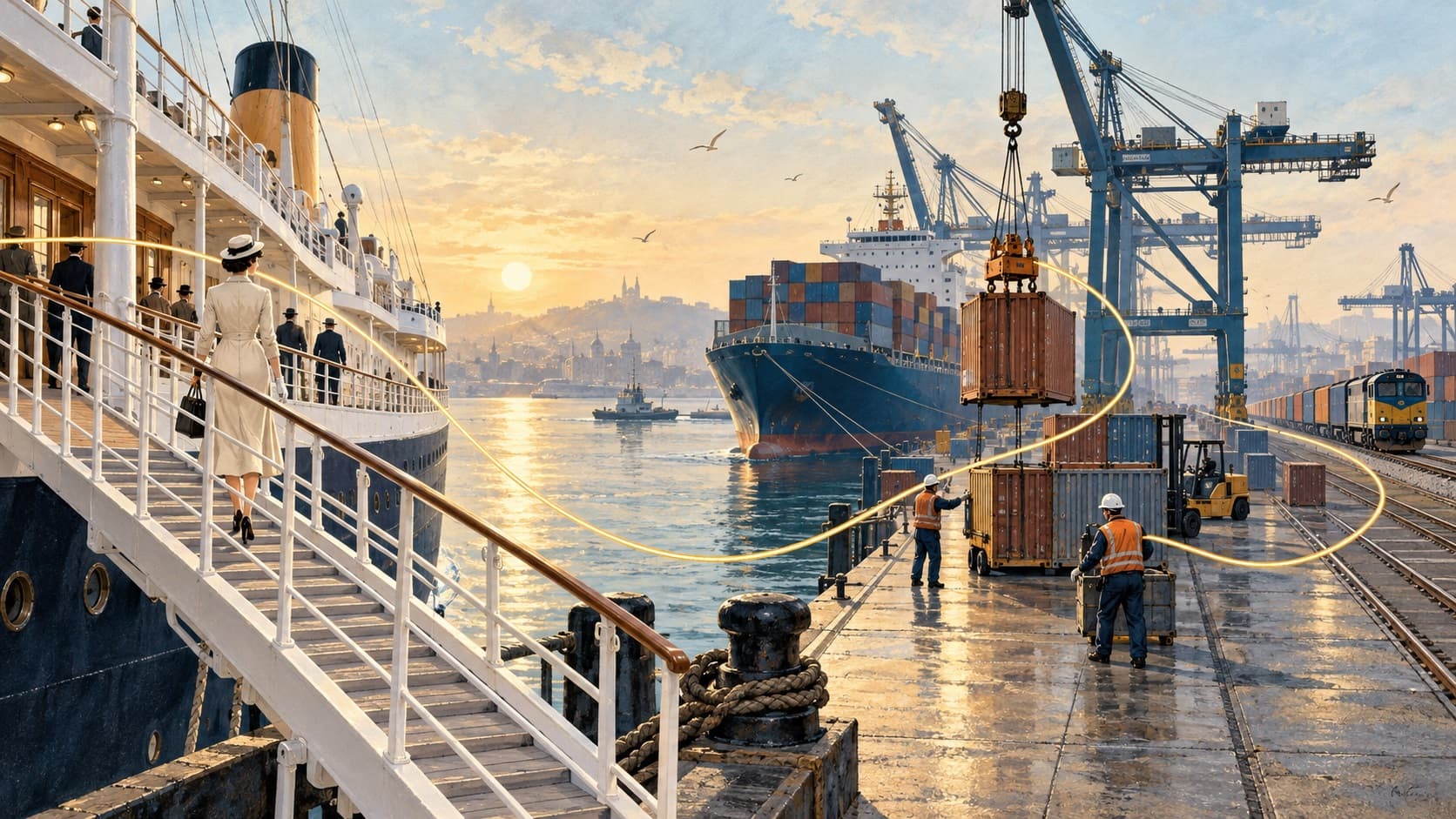
A passenger’s accident some seventy years ago gave rise to a clause that reshaped protection for those working alongside carriers. This article traces the Himalaya clause’s origins, its treatment under Korean law and its expansion into multimodal transport, before examining practical drafting considerations and the questions that autonomous ships, automated ports and other new technologies may raise for its future.
This blog post is an English translation of a Korean-language column the author contributed to the Korea Shipping Gazette on 11 August 2025. The translation is the author’s own; in the event of any discrepancy, the Korean original prevails.
An unexpected accident and the birth of the Himalaya clause
When Mrs Adler fell from the gangway of a passenger ship and was injured, no one would have anticipated that the incident would earn a place in maritime legal history. Unable to recover damages from the shipping company because of an exemption clause in her passenger ticket, she brought proceedings against the master and the boatswain, and succeeded.
The moment the English court ruled that a third party who was not a party to the contract could not rely on the exemption clause, the shipping industry faced a dilemma. It realised that, however perfectly an exemption clause was drafted, it offered no protection against an indirect attack through claims against crew members or stevedores. It was as though a strong defensive wall had been built, only for the back door to be found open.
Having recognised this legal gap, the shipping industry responded swiftly. It began inserting clauses into bills of lading providing that the carrier’s servants, agents and even independent contractors would enjoy the same benefit of limitation of liability and exemption from liability as the carrier. This is the provision now known as the Himalaya clause, named after the ship on which Mrs Adler had travelled.
Statutory protection and independent contractors under Korean law
Korea also joined this international trend. The Korean Commercial Act expressly provides that “the carrier’s servants or agents may invoke the defences and limitations of liability available to the carrier”. Interestingly, unlike the Hague–Visby Rules, which confine the corresponding protection to a servant or agent “not being an independent contractor”, the Korean Commercial Act contains no wording excluding independent contractors. It appears that the legislators at the time considered a separate express exclusion unnecessary because stevedores and others did not fall within the concept of an agent under Korean law.
The Supreme Court likewise interpreted the provision as excluding independent contractors from those entitled to invoke the carrier’s defences and limitations of liability. As a result, terminal operators, stevedores and others were inevitably exposed to legal risk. A turning point, however, came quickly.
In a 2007 judgment, the Supreme Court held that, where a bill of lading expressly included a Himalaya clause providing that independent contractors could also invoke the carrier’s defences and limitations of liability, even an independent contractor could rely on the carrier’s limitation of liability under that clause. The decision can be seen as striking a balance between the interpretation of the Commercial Act and the principle of private autonomy, taking practical needs into account.
Extending protection across multimodal transport
Internationally, the scope of Himalaya clauses appears to be expanding gradually. In 2004, the United States Supreme Court held that a Himalaya clause in a contract of carriage by sea could also apply to the inland leg of multimodal transport. In other words, even without express wording in the Himalaya clause, its overall purpose allowed an inland carrier to be recognised as an independent contractor and to invoke the clause.
In my view, this reflects the development of modern logistics into multimodal transport encompassing sea, land and air, and represents an attempt to establish a consistent liability regime throughout the transport process.
Practical considerations when relying on a Himalaya clause
Several important points need to be considered if Himalaya clauses are to be used effectively in practice. First, the wording of the clause must be clear and specific. It is preferable to list the parties to be protected specifically, rather than merely referring to servants and agents. The standard clause adopted by the Baltic and International Maritime Council (BIMCO) in 2016 can serve as a useful reference, as it expressly covers, besides the carrier, shipowners, managers, operators, sub-carriers, stevedores, terminal operators and all direct or indirect servants, agents or subcontractors.
Second, the timing of the issue of the bill of lading is also important. This is because a Himalaya clause cannot apply where the bill of lading has not yet been issued, which indicates a need for separate protection against accidents occurring at the terminal before the cargo is loaded. Third, it must also be borne in mind that a Himalaya clause does not apply in cases of intent or gross negligence.
New technologies and the next stage of adaptation
With the introduction of electronic bills of lading, autonomous ships, port automation, transport by drone and other new technologies, the time has come to consider a further stage in the evolution of the Himalaya clause. For example, whether operators of unmanned systems can fall within the traditional categories of servants or agents, whether the clause can apply to accidents caused by errors in automated algorithms, and how far its scope extends are among the issues we can expect to encounter and resolve in the future. We therefore need to anticipate and prepare for the complexities that technological advances will bring.
Conclusion
Although this may be an overstatement, I believe that the true value of the Himalaya clause lies not in establishing a uniform liability regime, but in seeking to protect the interests of the shipping industry as a whole in a balanced manner while responding flexibly to changing circumstances. In other words, what the Himalaya clause has demonstrated over the past 70 years is the shipping industry’s capacity to adapt. Just as Mrs Adler’s accident introduced a new paradigm to the shipping industry 70 years ago in the form of the Himalaya clause, a minor incident that we do not anticipate today may become the starting point for a new paradigm governing the industry for decades to come. Whether the shipping industry can develop steadily and sustainably may depend on the modest wisdom and efforts of us all.
K. M. Choi is a partner at Law Offices Choi & Kim, qualified in the Republic of Korea, with over ten years in shipping disputes, marine insurance and major casualties in Korean waters. He can be reached at kmchoi@choikim.com or on LinkedIn.
This article describes Korean law and practice in general terms and is not advice on the law of any other jurisdiction. The law is stated as at the date of the original Korean publication and may since have changed, and nothing here creates a lawyer–client relationship.